

Exterior Restoration · Render
What Is the Best Paint for Rendered Walls in Australia?
It is one of the most common questions homeowners ask before repainting a rendered home, and the honest answer surprises people: there is no single best paint for rendered walls. The right system depends on your walls, your climate and your preparation. This guide explains what actually matters, so you can choose the correct coating with confidence rather than guessing at a tin.
Is there a single best paint for rendered walls?
No, and anyone who gives you one product name without seeing your walls is guessing. Render is not a single, uniform surface. It covers everything from a fresh cement render on a new build to a decades old acrylic texture coat that has started to chalk, and the right paint for one is the wrong paint for another. It also assumes the render is sound to begin with: if yours is cracking, drummy or lifting, no paint will fix that, and the real starting point is render restoration and repainting rather than a coat of colour.
The correct choice always comes down to the same handful of things:
- Surface condition: new, sound, chalky, cracking or previously coated.
- Previous coatings: what is already on the wall, and whether it is still bonded.
- Exposure: how much sun, wind, rain and salt the wall cops.
- Climate: coastal, hot and dry, or subject to big temperature swings.
- Preparation: how the surface will be cleaned, repaired and primed.
- Desired finish: the sheen, colour and texture you are after.
Get those right and several quality products will give you an excellent, long lasting result. Get them wrong and even the most expensive paint on the shelf will fail early. So rather than chase a single winner, this guide helps you understand what a good render coating needs to do, so you can match the system to your home.
What makes a good paint for rendered walls?
Before you look at brands, it helps to understand what you are actually asking a render coating to do. Render is masonry, and masonry behaves differently to timber or plasterboard. A paint that performs beautifully inside can fail within a season or two on a rendered wall, because it is being asked to handle things it was never designed for. These are the properties that matter.
Breathability
This is the big one for render, and the one most often overlooked. Render holds and releases moisture, and a good coating has to let water vapour escape from the wall while still keeping liquid water out. A paint that seals the surface too tightly traps moisture behind it, and that trapped moisture eventually pushes the coating off, showing up as blistering, peeling or hollow patches. Breathable, water based systems are almost always the right call on render for this reason.
Flexibility
Render moves. It expands and contracts with heat, and it shifts slightly as the building settles. A coating with some flexibility can move with the wall and bridge fine hairline cracks, where a hard, brittle film simply splits along the same lines the render does.
UV resistance
The Australian sun is brutal on exterior coatings. Good render paint holds its colour and its film integrity under constant UV, rather than fading, chalking or going brittle after a few summers. This is where quality genuinely shows over the years.
Water and weather resistance
The coating needs to shed driving rain, resist wind blown grit, and on coastal homes cope with salt in the air, all without letting liquid water reach the render behind it. Weather resistance and breathability sound contradictory, but a quality exterior render system is engineered to do both at once.
Durability and adhesion
Finally, the coating has to stick and stay stuck. Strong adhesion to a correctly prepared render surface, plus a tough, hard wearing film, is what turns a repaint into a ten year plus finish rather than a three year disappointment. Adhesion is where preparation and product meet: the best paint cannot grip a dusty or chalky wall.
Quick tip
If you remember one thing, make it breathability. On render, a coating that cannot let the wall breathe is the single most common cause of early paint failure, no matter how premium the tin.
What paint do you use on render?
In practice, three families of coating do the vast majority of the work on Australian render. They are not competitors so much as different tools for different jobs, and the right one depends on how sound and how exposed your render is.
The default choice
Premium acrylic
Quality water based acrylic exterior paint. Breathable, flexible enough for most walls and available in every colour. The sensible choice for sound render in a normal setting.
Thicker, tougher film
High build membrane
A heavier bodied coating that lays down a much thicker film than standard paint. Bridges fine surface cracks and adds real weather protection on exposed or slightly imperfect render.
Most flexible
Elastomeric
A highly flexible, rubber like coating that stretches with the wall and bridges hairline cracks. Suited to render that moves or hairline cracks, and to harsh, exposed or coastal exposures.
Premium acrylic systems
For most homeowners with sound render, a premium acrylic exterior system is the right answer. Modern acrylics are breathable, hold colour well, and come in a huge range of finishes. Applied over properly prepared render with the correct primer or sealer, a good acrylic system delivers a clean, durable finish that lasts for years.
High build membrane coatings
A high build, or membrane, coating is essentially a thicker, tougher version of the same idea. Because it lays down a heavier film, it evens out minor surface imperfections, bridges very fine cracks and adds an extra layer of weather protection. It is a strong choice for exposed walls, older render, or homes where you want maximum protection and are willing to invest a little more.
Elastomeric coatings
Elastomeric coatings are the most flexible of the three. They form a thick, stretchy film that can move with the wall and bridge hairline cracks that would split a rigid coating. They suit render that is prone to fine cracking, and harsh or coastal exposures where movement and weather are both in play. They are a specialist product rather than an everyday default, and they need to be applied correctly to breathe properly.
Important
A flexible coating bridges fine, stable hairline cracks. It does not fix an active, widening or drummy crack, and it will not hold structural movement together. If your render has real cracking or hollow sounding areas, the cause needs treating first, which is a restoration job rather than a coat of paint.
Does render need special paint?
Render does not always need a special, dedicated product, but it does need the right kind of paint, and that rules a lot of options out. The key requirement is that the coating is designed for masonry: breathable, alkali tolerant and made for exterior exposure.
What you should not use is standard interior paint, or a cheap general purpose exterior paint, on rendered walls. These form a film that is either too tight to breathe or too weak to cope with the sun and movement, and they tend to peel, blister or fade quickly. Purpose made render and masonry coatings exist precisely because render places demands that ordinary paint was never formulated to meet.
So the honest answer is somewhere in between. You do not necessarily need an exotic specialty product for every home, but you absolutely need a quality exterior coating suited to render, applied as a complete system with the correct primer or sealer beneath it. The system matters as much as the topcoat.
Does render need a primer?
Usually, yes, especially on new or bare render. A primer is the layer that gives your topcoat something to grip, evens out how the surface absorbs paint, and stops problems in the render bleeding through the finish. Skip it where it is needed and you invite patchy colour, poor adhesion and early peeling.
There are two common situations:
- New or bare render: almost always needs priming or sealing. Fresh render is porous and highly alkaline, and it must be given time to cure before an alkali resisting sealer or primer is applied. Coat it too soon or without the right primer and the alkalinity can burn through and ruin the paint.
- Previously painted render in good condition: often does not need a full prime. Once it is clean and sound, a compatible topcoat can usually go straight on, with spot priming of any bare, repaired or chalky areas.
The right primer also depends on the surface. A chalky old wall, a repaired patch and a slick previously coated surface each call for a different primer, which is one of the reasons a proper assessment beats guessing.
Do I need to seal render before painting?
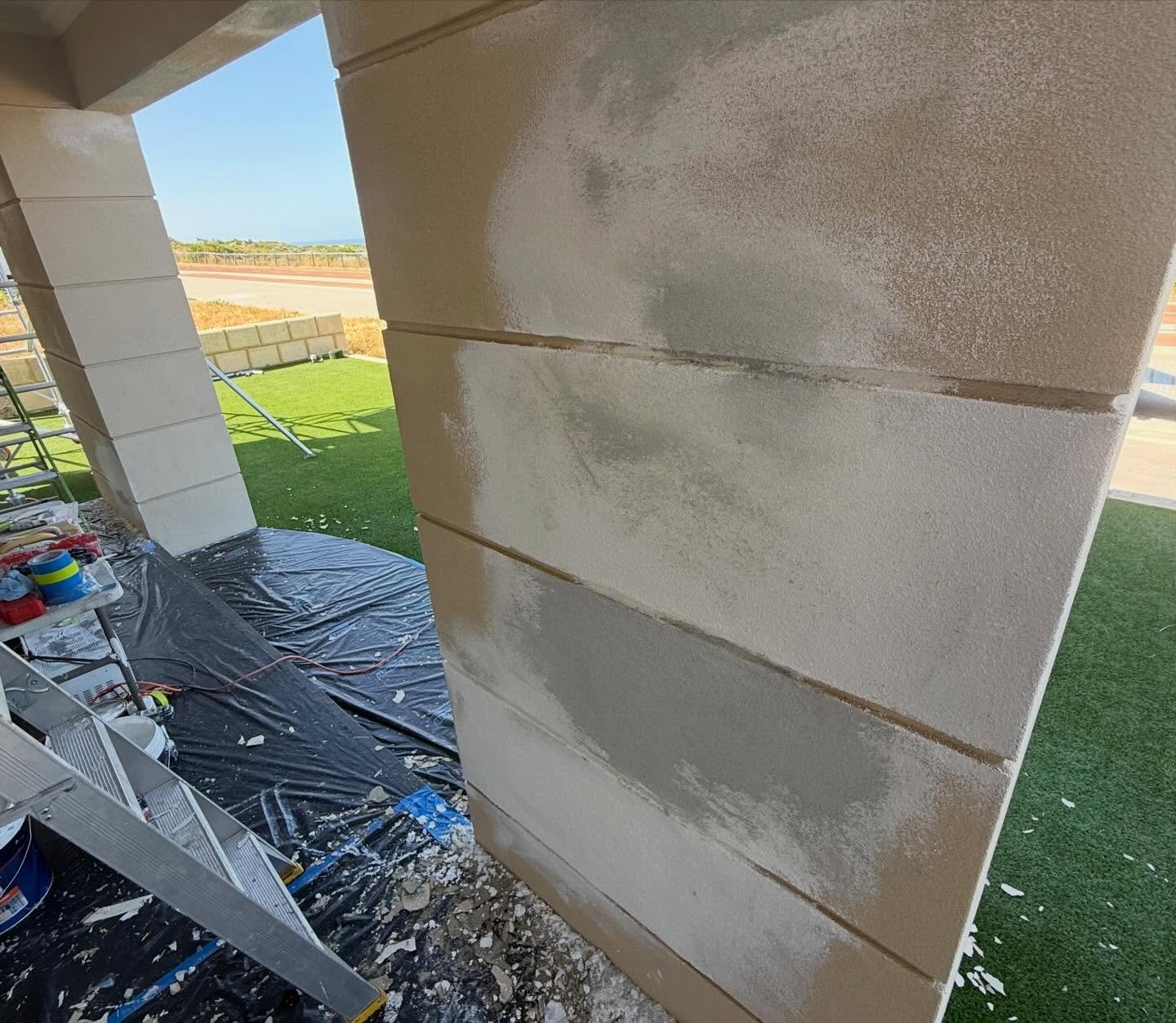
Bare or new render should be sealed before painting, and this is where a lot of confusion creeps in, because people use the words primer and sealer as if they mean the same thing. They are related, but they do different jobs.
Promotes adhesion
Primer
Prepares the surface and gives the topcoat a sound, consistent base to bond to. Think of it as the handshake between the wall and the paint.
Stabilises the surface
Sealer
Soaks into a porous, dusty or chalky surface and binds it together, so the topcoat adheres evenly and does not soak in and go patchy.
On render the two roles often overlap, and many products are sold as a combined primer sealer for exactly this reason. What matters is the condition of your wall:
- New render needs an alkali resisting sealer once it has cured, to lock down the surface and stop alkali attacking the paint.
- Old, chalky or powdery render needs a penetrating sealer or binder to consolidate the surface, otherwise the new coating is only ever as strong as the loose material underneath it.
- Sound, previously painted render generally does not need sealing across the whole wall, only spot treatment of bare or repaired areas.
In short, sealing is not always necessary, but on bare, new or deteriorated render it is essential. Getting this step right is often the difference between a finish that lasts a decade and one that starts lifting within a couple of years.
Can I paint straight over render?
Sometimes, but far less often than people hope. You can paint straight over render only when it is genuinely sound, clean, dry and either already sealed or previously painted in good condition. When all of that is true, a compatible topcoat can go straight on and you are simply refreshing a good surface.
The trouble is that most render needs at least some preparation first, and that preparation is what determines whether the repaint lasts. Before any paint goes on, a good job involves:
- Washing the wall to remove dirt, dust, salt, mould and any loose or chalky coating.
- Letting new render fully cure, which can take several weeks, before sealing and coating.
- Sealing bare, porous or chalky areas so the topcoat bonds evenly.
- Treating cracks and cutting back any drummy or blown sections rather than painting over them.
The most common mistake
Painting straight over damp, dusty, chalky or cracked render without preparing it is the number one reason a render repaint fails early. Paint has no structural strength, so a moving crack or a failing surface telegraphs straight back through a fresh coat, often within a season.
If your render is sound and just tired, a well prepared repaint is exactly the right answer, and part of what a quality exterior house painting job is designed to deliver. If it is cracking, chalking or lifting across the whole home, painting over the top only hides the problem. That is the point where render restoration and repainting is the correct solution, because it repairs the surface first and then coats it as a complete system.
Popular paint systems available in Australia
Australia is well served for quality render and masonry coatings, and several established brands make excellent products. It is worth saying clearly that there is no single universal winner. Each of these companies makes acrylic, membrane and, in some cases, elastomeric or texture systems, and the best choice depends on your render and your project rather than the name on the tin.
| Brand | Known for |
|---|---|
| Dulux | Widely available premium acrylic and render specific systems, including breathable membrane coatings and texture ranges. A common, well supported choice. |
| Haymes | Australian owned, with a strong reputation for exterior and masonry coatings and a well regarded render and texture range. |
| Wattyl | Long established, with solid exterior acrylic and masonry systems suited to a range of rendered surfaces. |
| Taubmans | Broad exterior range including durable acrylic systems with weather and dirt resistance for masonry and render. |
| Rockcote | A render and coatings specialist, known for breathable, purpose built render systems, textures and finishes. |
Rather than asking which brand is best, the more useful questions are: what condition is my render in, how exposed is it, and which system within a quality range suits that situation? A sound suburban wall, an exposed coastal facade and an older render prone to hairline cracking might all be beautifully finished by the same brand, using three quite different products from its range.
This is also where accreditation is worth something. As a Dulux Accredited business we work to specified systems and know which product suits which surface, but the same principle applies whichever quality brand you choose: match the system to the wall, and apply it as the manufacturer intends.
Is there a paint that looks like render?
Yes, briefly, because it comes up a lot. Texture coatings, sometimes called render effect or texture paints, are thick, aggregate filled coatings that create a rendered look on a surface without applying traditional render. They are rolled or sprayed on much thicker than normal paint and leave a fine, sand like or textured finish.
They can be a genuine option for adding a render style appearance to masonry, or for evening out and recoating an existing texture finish. They are a different product to ordinary paint, though, and applying and maintaining them is its own skill. If your goal is to restore or recoat an existing texture finish rather than create a new one, texture coat restoration and repair is the more relevant path.
Common mistakes when painting render
Almost every render repaint that fails early can be traced back to one of a small handful of mistakes. None of them are about the colour or the brand. They are about matching the product to the wall and preparing the surface properly.
The mistakes we see most, and why they cause problems
- Using unsuitable paint. Interior or cheap general exterior paint on render is too tight to breathe or too weak to last, so it blisters, peels or fades within a season or two.
- Poor preparation. A dusty, dirty or chalky wall gives the coating nothing solid to grip. The paint may look fine on day one and start lifting within a year.
- Painting damp render. Coating render that is still wet, or new render that has not cured, traps moisture and alkali behind the film, which pushes the coating off and can burn through the colour.
- Skipping the primer or sealer when it is needed. On bare, porous or chalky render this leads to patchy absorption, poor adhesion and early peeling.
- Ignoring hairline cracks. Painting straight over cracks without treating them, or using a rigid coating on a wall that moves, means the cracks simply reappear through the new finish.
- Choosing low quality coatings. Budget paint saves a little up front and costs far more over time, because it fades, chalks and fails years sooner than a quality system, meaning you repaint again much too soon.
The through line is simple: the finish is only ever as good as the surface underneath it and the suitability of the product on top. Spend your effort there, and almost every one of these problems disappears.
Not sure which system your render needs?
Choosing the right coating is genuinely easier once someone has looked at the actual condition of your walls, because the surface decides the system. If your render is sound and simply tired, a well prepared repaint is usually all it needs. If it is cracking, chalking or lifting, painting over the top will not hold.
When repainting alone is not the right fix, our guide to render restoration and repainting explains how the surface is repaired and recoated as a complete system, so the finish lasts. It is worth understanding the difference before you spend a cent on paint.
Ask a painter: quick answers
The short, straight answers we give homeowners on site when the talk turns to painting render.
Can I just use normal exterior paint on render?
Not really. Render needs a breathable masonry or render-specific paint. Standard or budget exterior paint either seals it too tightly or lacks the durability, and it tends to peel, blister or fade early.
How long should new render dry before painting?
Give new render time to cure, usually around four weeks, before an alkali-resisting sealer and topcoats go on. Paint it too soon and the alkalinity can burn through the finish.
Do I have to seal bare render first?
Yes. Bare, new or chalky render should be sealed so the topcoat bonds and doesn't soak in patchy. Sound, previously painted render usually only needs spot priming of repairs and bare areas.
Will painting stop my render cracking?
No. A flexible coating can bridge fine, stable hairline cracks, but it won't hold a moving or structural crack together. Those need the cause treated first, before any coating.
How many coats does render need?
Typically a primer or sealer coat plus two topcoats over well-prepared render. Exposed walls, strong colours and big colour changes can need an extra coat to look their best.
Can I paint render myself?
You can, but the result lives or dies on the preparation: washing, curing, sealing and choosing the right system. That is where most DIY render repaints fall down rather than on the rolling itself.
Frequently asked questions
How long does paint last on render?
A quality render coating over well prepared, sound render usually lasts around 10 to 18 years before it needs refreshing, and a good membrane or elastomeric system can last longer again. Lifespan depends heavily on preparation, exposure, colour and coating quality. West and north facing walls and dark colours weather fastest, so they tend to be the first to need attention.
Can painted render be repainted?
Yes. Painted render can be repainted many times over its life, as long as the existing coating is sound and well bonded. The wall is washed, any flaking or chalky coating is removed, repairs and bare patches are primed, and a compatible system is applied over the top. If the old coating is failing across the whole wall, it usually needs stripping back and restoring rather than simply recoating.
The bottom line
There is no single best paint for render, and that is genuinely good news, because it means the right result is within reach for almost any home. The trick is to stop hunting for a magic product and instead match the system to your walls. For most sound rendered homes, a premium breathable acrylic applied as a complete system is exactly right. Where the render is more exposed or prone to fine cracking, a high build membrane or an elastomeric coating earns its keep.
Whichever you choose, the coating is only half the story. Breathability, the correct primer or sealer, and honest preparation of the surface underneath are what turn a good paint into a finish that lasts a decade. And if your render is cracking, chalking or lifting rather than simply tired, remember that no paint fixes a failing surface. When render is genuinely breaking down, it needs putting right before any colour goes on, so the finish has something sound to hold on to.