

Interior Painting · Paint & Finishes
What Type of Paint Is Best for Interior Walls?
Standing in the paint aisle looking at low sheen, satin, semi gloss and a wall of tins can be genuinely confusing. The honest answer is that there is no single best paint for interior walls, only the right paint for the room in front of you. This guide explains what actually matters, so you can walk in knowing exactly what to buy.
Is there a single best paint for interior walls?
No, and it helps to let go of the idea early. The paint that is perfect for a bedroom wall is the wrong choice for a bathroom ceiling or a hard working hallway. Rather than one best product, there is a best match between the paint and the job. Matching the paint and finish to each room is exactly what a professional interior house painting job does as a matter of course, and none of it is complicated once it is laid out, which is what the rest of this guide sets out to do.
The right interior paint always comes down to the same handful of factors:
- The room: a quiet bedroom asks less of a paint than a kitchen or a busy hallway.
- The surface: plasterboard, timber trim, a previously painted wall or a fresh repair each behave differently.
- The level of wear: walls that get touched, scuffed and knocked need a tougher film.
- Moisture: bathrooms, laundries and kitchens need a paint that copes with steam and the odd splash.
- Desired finish: how much sheen you want, from dead flat to full gloss.
- Washability: how easily you can wipe marks off without burnishing the surface.
- Budget: quality paint costs more up front and usually saves money over its life.
Get those right and several products will give you an excellent result. The rest of this guide walks through each one, in the order you would naturally think about them.

What makes a good paint for interior walls?
Before you compare tins, it helps to know what actually separates a good interior paint from a cheap one. Price alone does not tell you, but these qualities do. They also explain why professional results look and last the way they do.
Durability
A good interior paint forms a tough, resilient film that stands up to everyday knocks, scuffs and cleaning without wearing thin. This matters most in the areas that cop the most life: hallways, stairwells, kids' rooms and around light switches and door handles.
Washability
Marks are a fact of life indoors. A washable paint lets you wipe off fingerprints, scuffs and the occasional crayon without the colour rubbing away or leaving a shiny burnished patch. Higher quality paints, and slightly higher sheen levels, clean up far more easily than cheap flat paint.
Coverage
Good paint has better hide, meaning it covers the surface and any colour underneath in fewer coats. Cheap paint often looks thin and patchy and needs an extra coat to get there, which quietly erases the saving that tempted you in the first place.
Low VOC and low odour
VOCs are the volatile compounds that give paint its smell as it dries. Modern water based interior paints are low VOC and low odour, which means less lingering smell and a more comfortable room to be in soon after painting. It is a genuine plus in bedrooms and anywhere children sleep.
Finish quality and ease of cleaning
Finally, a quality paint flows out to a smoother, more even finish with fewer roller marks and lap lines, and it holds that look over time rather than chalking or fading. A better finish is also easier to keep clean, because a smooth, consistent film gives dirt less to cling to.
Quick tip
The single biggest quality difference you can feel is coverage and washability. If you are choosing between two tins, the more expensive premium paint usually pays for itself in one fewer coat and years of easier cleaning.
Which paint is best for interior walls in Australia?
For the vast majority of interior walls in Australian homes, a premium water based acrylic is the right answer. Water based paints have come a long way and now dominate interiors for good reason: they are low odour, dry quickly, hold their colour, resist yellowing and clean up with nothing more than water. Old style solvent based (oil) paints are now mostly reserved for specific jobs like some trim and doors.
Where it gets more specific is which paint suits which room. The demands of a bedroom and a bathroom are not the same, and matching the paint to the room is what separates a finish that lasts from one that struggles.
Room by room, in plain terms
- Living rooms and bedrooms: a quality low sheen acrylic is the classic all rounder. Comfortable to look at, easy to touch up and forgiving on walls that are not perfectly flat.
- Hallways, stairwells and high traffic areas: step up to a more durable, washable paint, often a low sheen or satin, so scuffs wipe off rather than wear in.
- Kitchens: a washable satin or semi gloss handles grease, steam and regular wiping far better than flat paint.
- Bathrooms and laundries: use a paint made for wet areas, with added moisture and mould resistance, in a satin or semi gloss so it sheds steam and splashes.
- Ceilings: a dedicated flat ceiling paint hides imperfections and avoids drawing the eye upward with unwanted sheen.
You do not need five different products to paint a house, but you will usually use two or three: a general wall paint, a tougher washable paint for wet and high traffic areas, and a ceiling paint. That is normal, and it is how professionals approach a whole home repaint.
What paint finish should you choose?
Finish, or sheen, is the amount of shine the dried paint has, and it matters as much as the colour. Sheen changes how tough and washable the paint is, and how much it shows up flaws in the wall. As a rule, the higher the sheen, the tougher and more washable the paint, but the more it highlights every bump and imperfection.
| Finish | Look | Best for |
|---|---|---|
| Flat / Matt | No shine, hides flaws best | Ceilings, low traffic and formal rooms, walls that are not perfectly smooth |
| Low Sheen | Soft, subtle sheen | The all round choice for living areas, bedrooms and general walls |
| Satin | Gentle silky sheen, more washable | Hallways, kids' rooms, kitchens and higher traffic walls |
| Semi Gloss | Noticeable shine, tough and wipeable | Doors, skirting, window frames, trim and wet areas |
| Gloss | High shine, hardest wearing | Feature trim, timber joinery and detail work where a crisp finish is wanted |
Most homes use a mix, and that is exactly right. A typical scheme is flat on the ceilings, low sheen on the general walls, satin or semi gloss in the kitchen and bathrooms, and semi gloss or gloss on the doors, skirting and trim. The higher sheen on trim is deliberate: it stands up to knocks and hands, and it frames the room.
Timber trim, doors and mouldings are their own small decision. Painted timber usually takes a semi gloss or gloss enamel for durability and a crisp edge. Where you have natural timber features, such as a stained handrail or feature joinery, that is a staining and clear coating job rather than a painting one, and it is worth reading up on timber restoration and staining before you decide whether to paint over timber or bring the grain back.
Watch out
Higher sheen shows every imperfection. On a wall that is not dead flat, a satin or semi gloss will pick up bumps, patches and roller marks that a low sheen would quietly hide. The rougher the wall, the lower the sheen you generally want.

What paint do most professional painters use?
Homeowners often expect painters to swear by one brand. In practice, good painters choose the paint system to suit the project, not out of loyalty to a badge. They reach for premium trade lines from the major manufacturers and match the product and sheen to the surface, the room and the wear it will see. The common thread is not a single tin, it is quality paint applied over proper preparation.
What professionals do consistently is buy up the range rather than down. Trade and premium lines have better hide, flow and durability than budget lines, which is why a professional finish looks even and lasts. The paint is only ever half of it though, the preparation underneath is what makes a good paint perform.
Is Dulux or Taubmans better?
This is the brand question we hear most, and the honest answer is that neither is universally better. Both Dulux and Taubmans make genuinely excellent interior paints, and a well prepared job in either will look great and last for years. Painters tend to choose between them based on the specific product line, the finish needed, how well a colour matches, and how a given paint behaves on the surface in front of them on the day.
It is also worth knowing that they are not the only two. Haymes and Wattyl both produce quality interior paints that professionals rate highly depending on the application. So rather than asking which brand wins, the more useful question is which product and finish suits your particular walls. Any of these brands, in the right line and applied properly, will give you a result you are happy with.
Should I prime before painting?
Primer is the step most people are tempted to skip, and the one that quietly decides whether a paint job looks even and lasts. The simple rule is to prime when the surface needs it, and plenty of situations do. A primer or undercoat gives the topcoat something consistent to grip, evens out how the surface absorbs paint, and blocks stains and old colours from bleeding through.
When primer is essential
- New plasterboard: bare board and its paper are porous and absorb paint unevenly. A dedicated plasterboard sealer or undercoat is essential for an even finish.
- Repairs and patches: filler and patched areas soak up paint differently to the surrounding wall and will flash through as dull spots unless spot primed first.
- Stained surfaces: water marks, smoke, marker and similar stains need a stain blocking primer, or they bleed straight back through fresh paint.
- Glossy surfaces: existing gloss or semi gloss, and slick surfaces generally, need an adhesion primer or a proper sand so the new paint can grip rather than peel.
When can you skip it? A sound, previously painted wall in good condition that you are refreshing in a similar colour usually does not need a full prime across the whole surface. In that case, spot priming the repairs and any stains, then applying two quality topcoats, is generally enough. The judgement call is really about the condition of the wall, not a blanket rule.
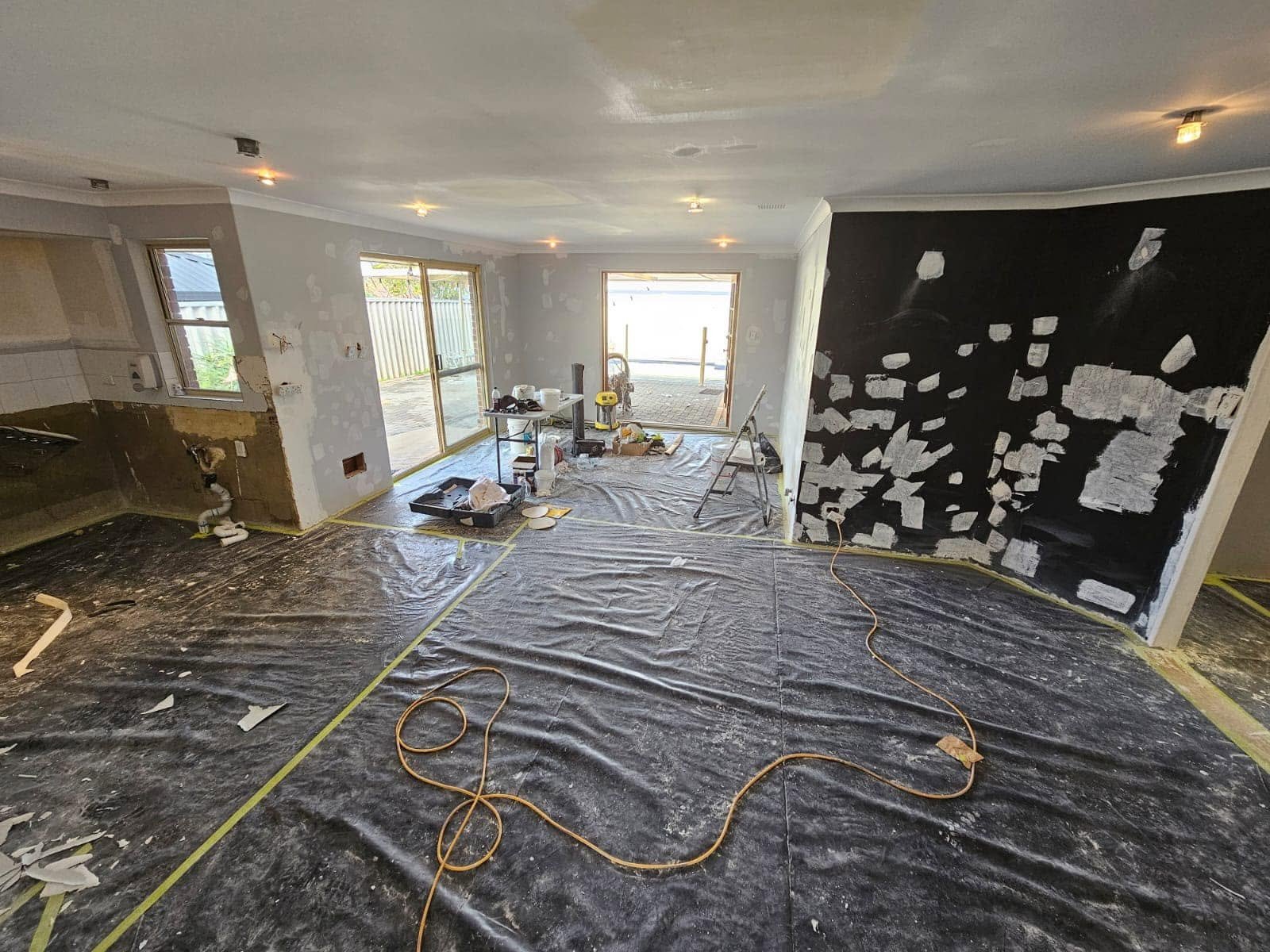
Common mistakes when choosing interior paint
Most disappointing interior paint jobs come down to a choice made before the brush was ever picked up. Avoid these and you are most of the way to a finish you will be happy with.
The mistakes we see most, and why they matter
- Choosing the wrong finish. A high sheen on an imperfect wall highlights every flaw, while flat paint in a kitchen or hallway marks up and cannot be cleaned. Match the sheen to the room, not just the look you like in a photo.
- Buying cheap paint. Budget paint has poor hide and washability, so it needs more coats and marks up quickly. It almost always costs more over its life than quality paint bought once.
- Skipping primer. Painting straight over bare board, repairs, stains or gloss without priming leads to patchy colour, flashing and peeling. The topcoat can only be as good as what it is sitting on.
- Using ceiling paint on walls. Ceiling paint is a dead flat, low durability paint made to hide and stay put overhead. On walls it scuffs and cannot be washed, so marks are there to stay.
- Ignoring washability. In any room that sees hands, cooking or kids, a paint you cannot wipe clean will look tired fast. It is worth choosing for how the room is used, not just how it looks on day one.
- Choosing the wrong paint for wet areas. Standard wall paint in a bathroom or laundry struggles with constant steam and can grow mould. Wet areas need a moisture and mould resistant paint in a wipeable finish.
The pattern behind all of these is the same: choose the paint for how the room is actually used and how the wall is actually prepared, not for the price tag or the swatch alone.
Ask a painter: quick answers
The short, straight answers we give homeowners when the talk turns to choosing interior paint.
What's the most popular interior wall finish?
Low sheen. It suits most living areas and bedrooms, is easy to touch up, and is forgiving on walls that are not perfectly flat.
Can I use the same paint on walls and ceilings?
Better not to. Ceilings take a dead-flat, low-durability ceiling paint; used on walls it scuffs and cannot be washed. Use a proper wall paint on walls.
Do bathrooms need special paint?
Yes. Use a paint made for wet areas, with added moisture and mould resistance, in a wipeable satin or semi gloss so it copes with steam and splashes.
How long should I wait between coats?
Most water-based interior paints recoat in about two hours, but always follow the tin. Rushing the second coat can drag and lift the first.
Is premium paint actually worth it?
Usually. Better coverage and washability often mean one fewer coat and years of easier cleaning, which tends to offset the higher price over the paint's life.
Can I paint a light colour over a dark wall?
Yes, but prime or undercoat first and expect an extra coat. Strong old colours bleed through and look patchy if you skip that step.
Frequently asked questions
How many coats of interior paint are usually needed?
Two topcoats over a suitable primer or undercoat is the standard for a durable, even finish. One coat rarely gives full, uniform coverage, especially over a colour change, a repair or fresh primer. Strong colours, big colour changes and patchy or porous surfaces can need a third coat to look their best.
Can different paint finishes be mixed throughout a house?
Yes, and most homes are painted exactly that way. A common scheme is flat on ceilings, low sheen on general walls, a washable satin or semi gloss in kitchens, bathrooms and hallways, and semi gloss or gloss on doors, skirting and trim. Mixing finishes by how each area is used is normal and sensible, not a mistake.
The bottom line
There is no single best interior paint, and that is genuinely freeing once it clicks. For most walls in an Australian home, a premium water based acrylic in low sheen is the reliable all rounder, with a tougher, washable satin or semi gloss for kitchens, bathrooms, hallways and trim, and a dedicated flat paint on the ceilings. Choose the sheen for how the room is used, buy up the range rather than down, and prime wherever the surface calls for it.
Do that and almost any of the quality brands will give you a finish you are proud of. And if you would rather not spend your weekends cutting in and rolling, or you simply want it done to a professional standard first time, it is worth understanding what goes into a proper interior house painting job, so you know exactly what good looks like whether you do it yourself or have it done.